Conestoga Open Learning
Kitchener
Dental & Wellness Office Administration, 3rd edition Copyright © 2026 by Claire Palvetzian and Nina Pereira is licensed under a Creative Commons Attribution-NonCommercial-ShareAlike 4.0 International License, except where otherwise noted.
This book and the media within may not be used in the training of large language models or otherwise be ingested into LLMs or generative AI software without the permission of Conestoga College.
1
This resource is meant to accompany the instruction of ADMN1340 Dental and Wellness Office Administration, a level 2 course within the Medical Office Practices and Health Office Administration programs in the School of Business at Conestoga College.
This third edition replaces Dental & Wellness Office Administration, 2nd edition, with added topic coverage and activities.
As part of our commitment to delivering high-quality Open Educational Resources (OERs) and Open Access learning materials (OAs), we invite you to report your OER and OA adoptions. The information you provide helps us to continue supporting high-quality OERs, track impact statistics, and save costs. We will use the data collected in this form to gather information about your use of OERs supported by Open Learning at Conestoga College. If you’ve adopted an open textbook supported by Open Learning at Conestoga College, we’d love to hear from you! Please share your adoptions with us by completing our Report an Adoption Form.
2
At Conestoga College, we would like to acknowledge that in Kitchener, Waterloo, Cambridge, and Brantford, we are located on the Haldimand Tract, the land promised to the Haudenosaunee people of Six Nations, which includes six miles on either side of the Grand River. This is the traditional territory of the Anishinaabe, Haudenosaunee, and Neutral peoples. Recognizing the land is an expression of gratitude and appreciation to those whose environment we reside in and a way of honouring the Indigenous people living and working on the ground for thousands of years.
Tanya du Plessis, Dean, Schools of Business, Community Services, & Hospitality
Scott Dart, BSc, MBA, CPP, Chair, School of Business
Kimberlee Carter, MA, BEd, Associate Director, Libraries and Open Learning
Juliet Conlon, MLS, Scholarly Communications Librarian
Rachel Stuckey, MA, Instructional Designer – OER
Justin Blake
Jiya Pandit
Rashid Mohamud
Hana You
Special thanks to Alan Lotaquon, Animator – Media Services, who created the original illustrations for the second edition of this resource on behalf of Conestoga College.
3
I have used many open educational resources in the courses I’ve taught and decided to take the opportunity to create one of my own for ADMN1340! The real inspiration for this project came from seeing how valuable OER are to both faculty and students, and I hope that this OER will positively impact this course moving forward.
Thank you to Nancy Weatherhead for the original idea of creating a resource for this course, and for taking the time to introduce the basic concepts to get me started on this project. Thank you also to Holly Ashbourne for hosting two great workshops that provided the foundational skills for creating a Pressbook and H5P’s which aided in my development process.
– Claire Palvetzian
4
“Dental & Wellness Office Administration, 3rd edition” copyright © by Claire Palvetzian and Nina Pereira was published by Conestoga College Open Learning in 2026 and is licensed Creative Commons Attribution-NonCommercial-ShareAlike 4.0 International except where otherwise noted. Any derivative work must include an attribution statement on each page, with a link back to the original work.
Original images for this project were created by Media Services and Open Learning at Conestoga College and are licensed Creative Commons Attribution-NonCommercial-ShareAlike 4.0 International.
Other image credits and attributions are included either in the captions or in the attribution sections on each page.
Book cover design by Rachel Stuckey.
Book cover image “Waiting Room in a Hospital” by Los Muertos Crew on Pexels.
This resource is an updated edition of Dental & Wellness Office Administration: Course Pack, 2nd edition, by Claire Palvetzian, published by Conestoga College Open Learning under a Creative Commons Attribution-NonCommercial-ShareAlike 4.0 International license in 2024.
In addition to minor editorial changes throughout, this edition includes the following substantive changes.
| Chapter | Description of Changes |
|---|---|
| Week 1 | New H5P flip card activity about dental office employment opportunities |
| Week 3 | New H5P flip card activity for the dental conditions with images New summary table of dental procedures with images Table of dental procedures codes moved to week 7 to align with course delivery |
| Week 4 | Description of odontogram symbols updated |
| Week 7 | Table of dental procedure codes moved from week 3 to align with course delivery Added discussion of the birthday rule for insurance |
| Week 12 | Streamlined coverage of the birthday rule for insurance Streamlined discussion of the coordination of benefits for children New H5P activity on the coordination of benefits for children |
| Week 13 | New H5P flip card activity on optometry conditions with images |
Microsoft Copilot was used to support the editors of this resource in generating descriptions of anatomy and medical conditions for H5P activities and alternative text.
Our commitment to quality at Conestoga College ensures that Open Learning holds faculty and staff to high standards. Therefore, any use of AI is vetted for transparency and disclosed, and authors are accountable for their content’s accuracy, integrity, and originality. We are committed to transparency and believe that the use of AI contributes to the quality and accessibility of this resource. For more information, Conestoga’s Evolving AI Guidelines provide a thorough description of how faculty and staff can use AI.
5
Conestoga College Open Learning is committed to producing open educational resources that are accessible to as many learners as possible. We encourage our authors to adopt a universal design for learning approach and aim to comply with the accessibility standards of the AODA and WCAG.
If you experience challenges accessing this resource or have suggestions for how we might improve accessibility in our OER, please contact us at openlearning@conestogac.on.ca.
For more information about how we strive to meet accessibility standards, please review the Conestoga College Accessibility Statement for OER Projects.
This OER is available in multiple formats, including PDF. To download, select the format from the “Download this book” dropdown menu beneath the cover image on the title page.
6
Claire Palvetzian first joined Conestoga College in January 2017 and has been teaching in the Medical Office Practices and Health Office Administration programs ever since! She has an undergraduate degree in Kinesiology and a master’s in education, both from Wilfrid Laurier University. Claire’s industry experience is in non-OHIP health and wellness offices, where she has worked with several different healthcare professionals; she also spent two years working in the insurance industry.
Nina Pereira first joined Conestoga College in September 2015 and has been teaching in the Medical Office Practices and Health Office Administration programs since that time. She is a dental and health office administrator as well as a level 2 certified dental assistant. Nina’s industry experience spans both OHIP and non-OHIP health offices, with experience in dental offices, physician offices, and specialty offices. Nina also spends much of her free time advocating for persons with disabilities and offering support to parents with children who have new diagnoses of autism.
7
This course pack replaces the traditional textbook and contains readings, videos, and activities to help you understand the course outcomes. The activities can be completed multiple times and serve as a great knowledge check or in preparation for upcoming graded assessments.
Enjoy!
Welcome to week 1 of ADMN1340! During the first half of this course (weeks 1-7) we will explore concepts specific to dental offices. The activities built into each week are meant to recap concepts learned through these chapters and during class. Although they will not be graded by your instructor, they are a great way to check in to see how you are grasping the content and to prepare for upcoming assessments.
There are several MOP/HOA employment opportunities and career advancements within the dental environment:
We will be getting to know each of these roles in greater detail over the next seven weeks.
You can review average pay for dental office administrator [new tab].on the Payscale website.
In class we reviewed the different employment opportunities and tasks associated with each job. Complete the activity below to test your knowledge of the different employment opportunities within the dental environment.
An interactive H5P element has been excluded from this version of the text. You can view it online here:
https://ecampusontario.pressbooks.pub/dentalwellness3/?p=26#h5p-36
Dental offices utilize unique marketing strategies to optimize their business. Remember that dental care (outside of emergency hospital treatment and some supplementary plans) is not covered by OHIP, and therefore these offices operate similarly to a business rather than a non-profit doctors’ office.
Some examples of dental marketing include:
Question: How and why did you select the dental office that you last visited?
Perhaps through the recommendation of a friend or family member, the proximity to your home, the hours of operation and appointment availability, or the excellent customer service!
Review the Infection Prevention and Control (IPAC) document below to identify the best practices for cleaning, disinfection, and sterilization techniques used in dental offices in Canada.
Ultrasonic Cleaning: involves the use of high-frequency ultrasound waves to cleanse instruments in water. A cleaning solution is often added to assist in removing all visible debris. Instruments are clean but not sterile.
Autoclave Device: uses high-pressure steam to remove all bacteria, viruses, or fungi from dental instruments. Instruments would then be considered sterile and ready to be used on the next patient.
Watch this short video titled “Dental Sterilization: The Autoclave and Ultrasonic” to learn the difference between the two devices.
| Team Member | Education | Scope of Practice | Regulatory College |
|---|---|---|---|
| Dentist (DDS – Doctor of Dental Surgery) | Must graduate from a dental postgraduate program and complete the National Dental Examining Board of Canada. May then choose to specialize by completing specialty training. | Evaluates, diagnoses, and treats diseases and disorders of the oral cavity. Legally responsible for the care of the client. | The Royal College of Dental Surgeons of Ontario |
| Registered Dental Hygienist | Must obtain a diploma in dental hygiene and complete the National Dental Hygiene Certification Exam. | Assesses periodontal health, performs prophylaxis, perform scaling, apply sealants or fluoride, processes radiographs, educates patients on dental hygiene. | College of Dental Hygienists of Ontario |
| Registered Dental Assistant Level 1 | Must obtain a certificate from a dental assisting program. | Referred to as “Chair-Side.” Exchanges instruments with dentist, mixes dental materials. | Ontario Dental Assistants Association |
| Registered Dental Assistant Level 2 | Must obtain a certificate from a dental assisting program. Must complete the National Dental Assisting Examination Board Exam. | Referred to as “Intra-oral.” Provides oral evacuation during procedures, takes impressions, applies topical sealants or anesthetics. | Ontario Dental Assistants Association |
In class, we reviewed the 9 different specialties that a dentist may pursue to treat specific conditions or support a particular population of clients. Complete the activity below to check your knowledge of the 9 different dental specialists:
An interactive H5P element has been excluded from this version of the text. You can view it online here:
https://ecampusontario.pressbooks.pub/dentalwellness3/?p=26#h5p-1
Average dental receptionist hourly pay in Canada. (n.d.). PayScale. Retrieved March 20, 2023, from https://www.payscale.com/research/CA/Job=Dental_Receptionist/Hourly_Rate
Baillargeon, S. (2008). Dental office administration. Thomson Nelson.
Public Health Ontario. (2019). IPAC checklist for dental practice – Reprocessing of dental/medical equipment/devices [PDF]. Retrieved March 20, 2023, from https://www.publichealthontario.ca/-/media/Documents/C/2019/checklist-ipac-dental-reprocessing.pdf
Tooth Talk. (2022, November 15). Dental sterilization: The autoclave and ultrasonic. [Video]. Youtube. https://www.youtube.com/watch?v=z7GGgDe2RBs&t=2s
Welcome to week 2! During class you will be become familiar with the anatomy of the mouth and teeth and learn about Canada’s preferred dental tooth numbering system. This information will serve as an important foundation for future topics in this course such as dental conditions and procedures, charting, and insurance. There are several great knowledge checks available to you this week, so be sure to complete all the activities!
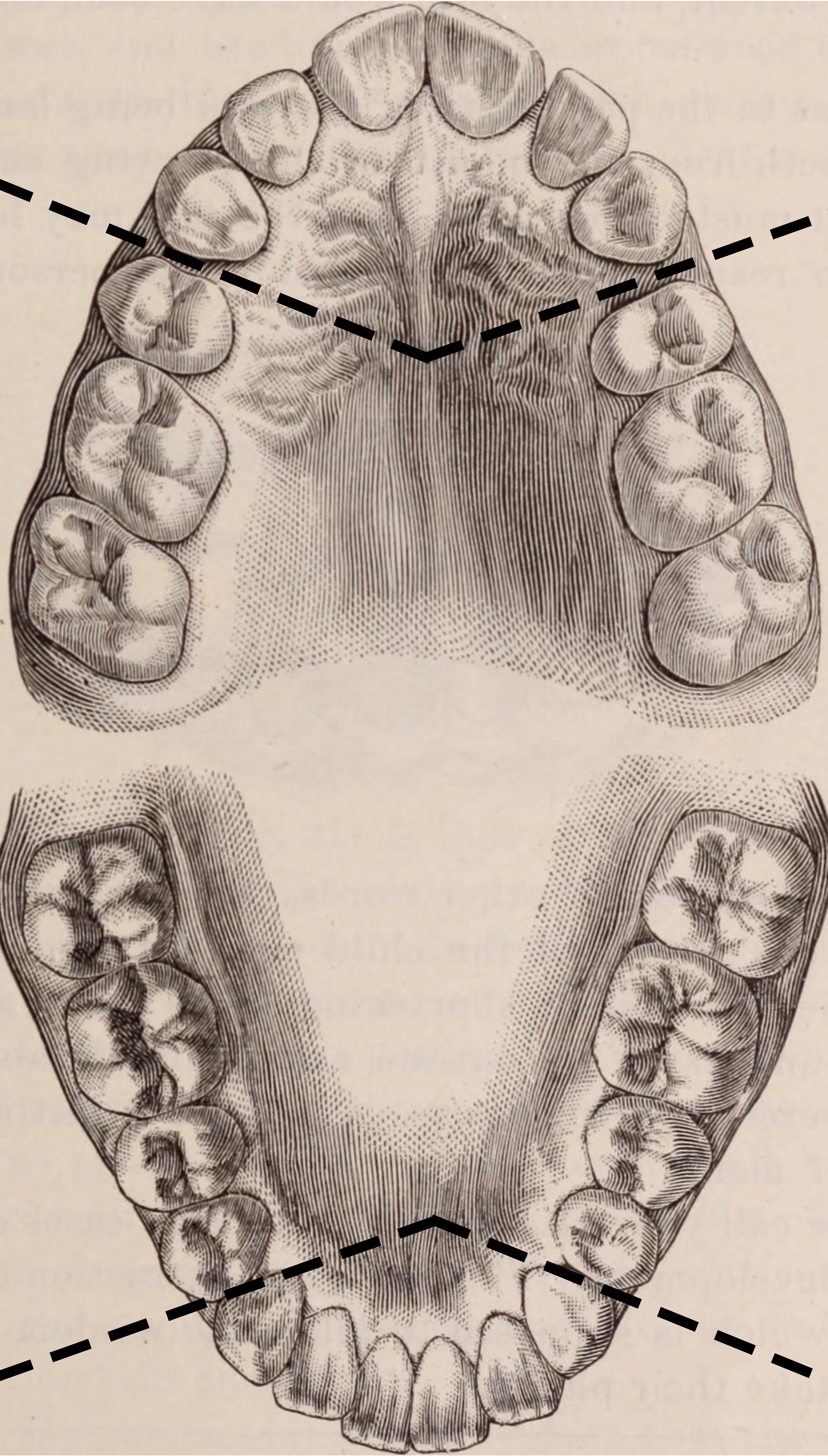
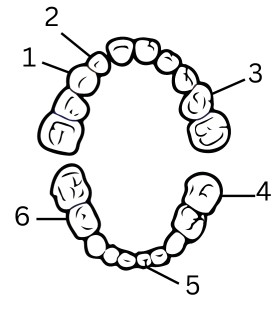
The maxillary arch (upper arch) is part of the skull, and not capable of movement. The mandibular arch (lower arch) is moveable through the temporomandibular joint (TMJ). Occlusion refers to when teeth of both arches are in contact.
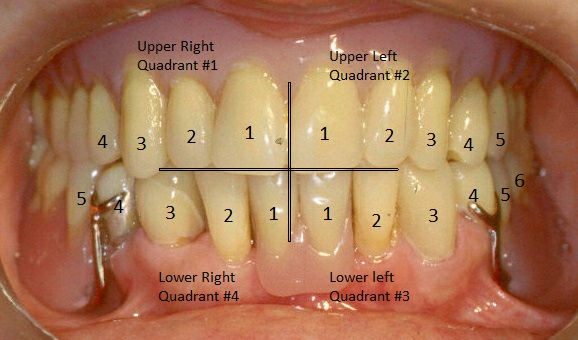
The 2 arches are divided into 4 equal sections called quadrants.

Use your knowledge of the upper and lower arch names to fill in the correct dental quadrant name below:
An interactive H5P element has been excluded from this version of the text. You can view it online here:
https://ecampusontario.pressbooks.pub/dentalwellness3/?p=33#h5p-2
The teeth are also divided into 6 equal parts called sextants. This includes upper front, left/right, and lower front, left/right.
Use your knowledge of the upper and lower arch names to fill in the correct dental sextant names below:
An interactive H5P element has been excluded from this version of the text. You can view it online here:
https://ecampusontario.pressbooks.pub/dentalwellness3/?p=33#h5p-3
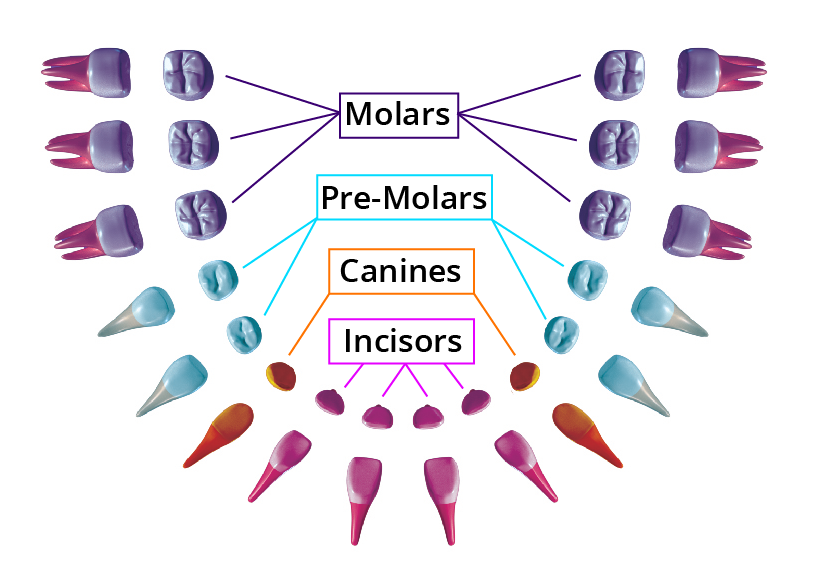
The 4 Types of Teeth:

Incisors (Pink): Made up of central incisors and lateral incisors. Single rooted with a thin edge.
Cuspids/Canines (Orange): The longest and most stable teeth with the longest roots.
Bicuspids/Premolars (Blue): Have a broad chewing surface designed to grind food.
Molars (Purple): Shorter and blunt with the largest surface for chewing.
Primary dentition is also known as deciduous dentition or baby teeth. These are the first set of 20 teeth that are usually present by age 2. The mandibular central incisors are among the first teeth to erupt, with mandibular molars among the last. Primary teeth can decay more quickly because the enamel and dentin are thinner. This means that good oral hygiene practices are even more important among children.
Mixed dentition refers to the period of time when children have a mixture of both permanent and primary teeth. Crowding may begin as the jawbones begin to grow to accommodate larger permanent teeth. This can cause pain, discomfort, and embarrassment due to differences in size and spacing.
Permanent dentition is also known as adult teeth. On average, this consists of 32 teeth and fully appear once the last primary tooth is shed by age 14. The exception is 3rd molars, which usually appear by age 18.
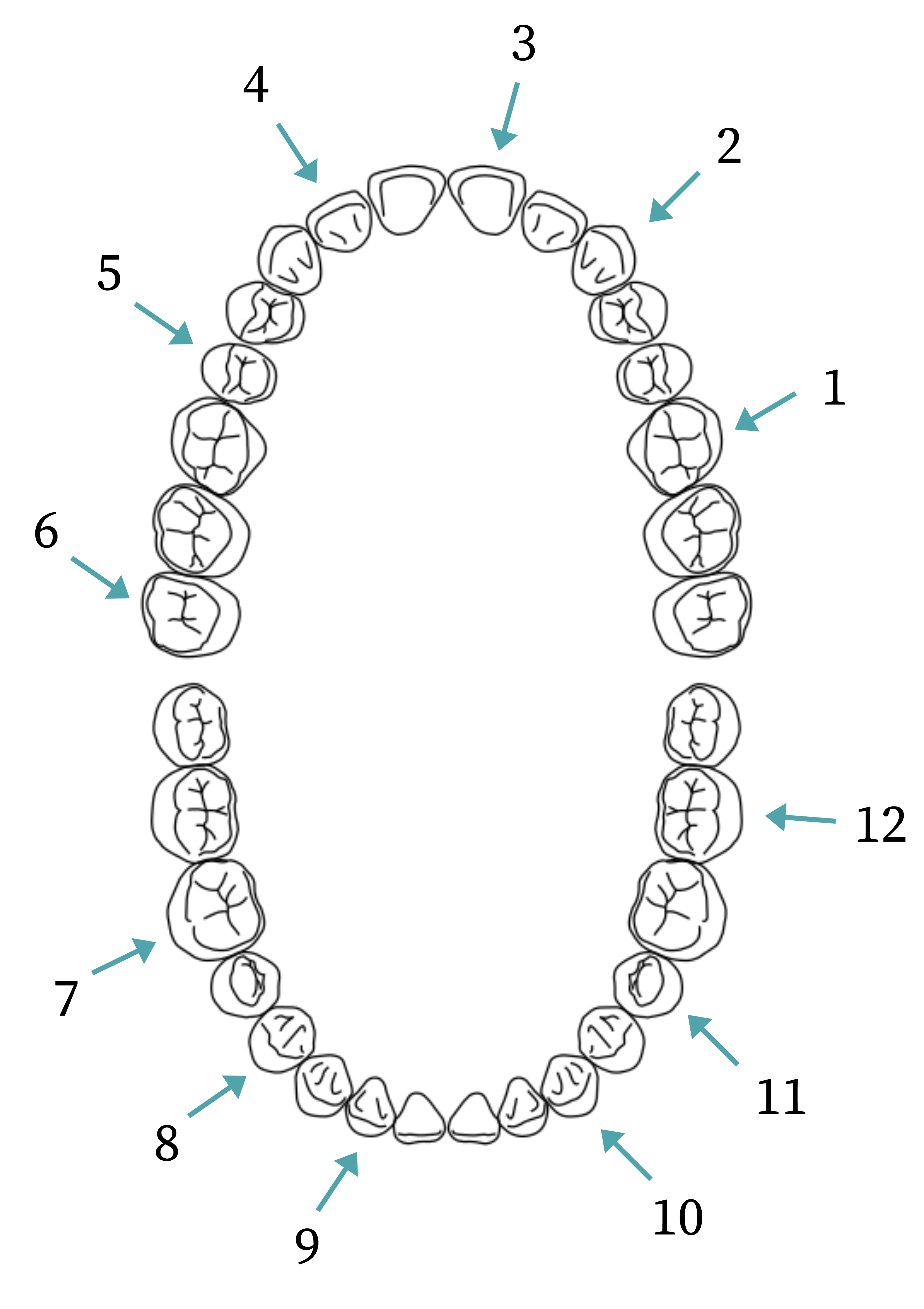
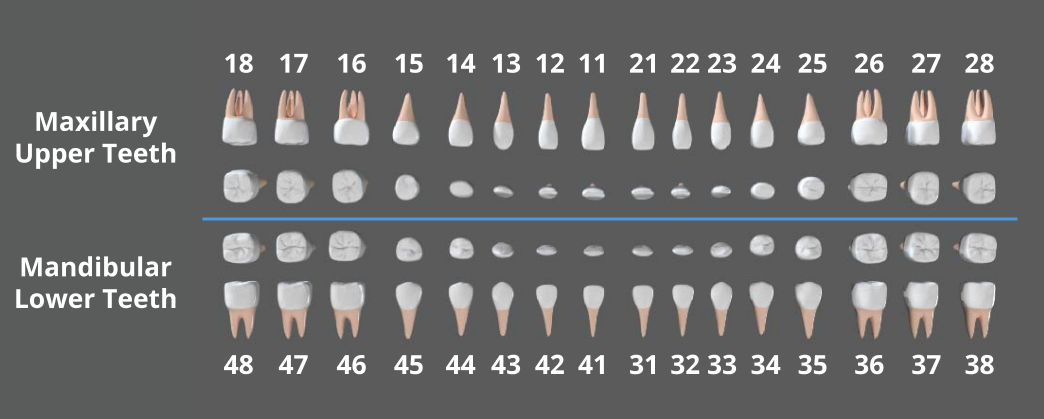
The International (FDI) Tooth Identification System is the most commonly used dental labelling system in Canada. The Universal Numbering System is commonly used in the United States. The Palmer Notation System is commonly used in the United Kingdom.
We will focus our learning material on the international (FDI) system.
Tooth labelling will come up again when we explore dental insurance!
Identify the permanent teeth using the International Tooth Identification System.

An interactive H5P element has been excluded from this version of the text. You can view it online here:
https://ecampusontario.pressbooks.pub/dentalwellness3/?p=33#h5p-4
Identify the primary teeth using the International Tooth Identification System.

An interactive H5P element has been excluded from this version of the text. You can view it online here:
https://ecampusontario.pressbooks.pub/dentalwellness3/?p=33#h5p-5
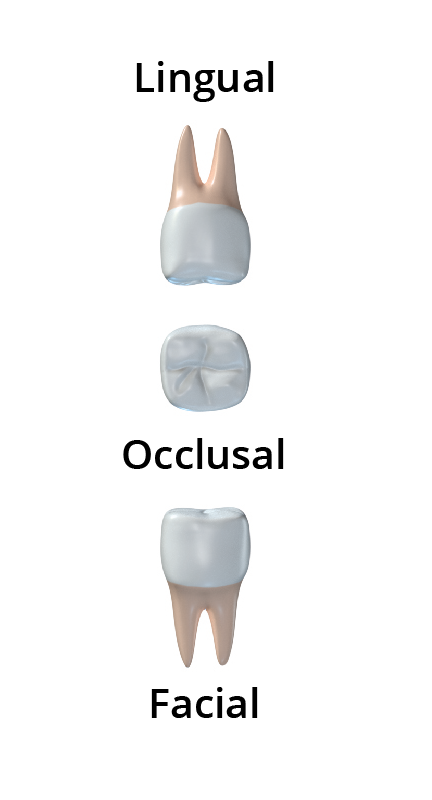
Each tooth has 5 surfaces.
Distal: the surface of the tooth further from the midline.
Mesial: the surface of the tooth closest to the midline.
Incisal (anterior) / Occlusal (posterior): the biting/chewing surface of the tooth.
Labial (anterior) / Facial or vestibular (posterior): the surface facing the inside of the face/cheek/gums.
Lingual / palatal: the surface of the tooth closest to the tongue
Tooth surfaces will come up again when we explore dental insurance!
Review the key components of tooth anatomy below:
An interactive H5P element has been excluded from this version of the text. You can view it online here:
https://ecampusontario.pressbooks.pub/dentalwellness3/?p=33#h5p-6
Torres, H. O., Ehrlich, A., Bird, D. & Dietz, E. (2009). Modern dental assisting (9th ed.). W.B. Saunders Company.
Baillargeon, S. (2008). Dental office administration. Thomson Nelson.
Your Module 1 assignment will have you explore a dental condition or procedure commonly found within the dental office. Below you will find images and descriptions of the more common dental conditions and procedures.
An interactive H5P element has been excluded from this version of the text. You can view it online here:
https://ecampusontario.pressbooks.pub/dentalwellness3/?p=35#h5p-28
Each dental procedure corresponds with a dental billing code. These are categorized into 9 different branches of dentistry. The groupings and codes will be reviewed in week 7 when we discuss dental insurance.
Below is a table that highlights 14 common dental procedures, each accompanied by an associated image.
| Procedure Name | Procedure Description | Image |
|---|---|---|
Inlays, and Onlays | Custom dental restorations that cover a portion of the anatomic crown of a tooth. | ![]() |
Dental Crowns | Custom dental restoration that covers the entire anatomic crown of a tooth. | ![]() |
| Dental Bridges | A fixed prosthetic device consisting of artificial teeth (pontics) that are supported by attaching them to abutment teeth (anchor teeth). | ![]() |
| Dental Restorations (Composite and Amalgam Fillings) | Dental restorations used to replace decayed tooth matter. Amalgam fillings are made of metal material and composite fillings are made of resin. | ![]() ![]() |
| Dental Veneers | A layer of tooth coloured material (composite or porcelain) that is bonded or cemented to the prepared tooth surface. | ![]() |
| Dental Implants | Artificial teeth attached to anchors that have been surgically embedded into the jawbone. | ![]() |
| Dentures | A removable prosthesis to replace missing teeth within the same arch. Can be implant-supported. | ![]() |
| Dental X-rays | Radiographic images of the teeth and jaws that aid in diagnosis and treatment. | ![]() |
| Dental Scaling and Prophylaxis | A preventative dental procedure to remove hard and soft deposits from below and above the gumline. | |
| Dental Sealants | A dental procedure where a thin coating of composite filling material is used to seal the pits and fissures on posterior teeth to prevent dental caries. | ![]() |
| Dental Extraction | The removal of a tooth from its socket due to infection, fracture, gum disease or an impacted tooth. | ![]() |
| Root Canal Therapy | The removal of infected pulp from inside a tooth. | ![]() |
| Gum Grafting (Soft Tissue Grafting) | A dental procedure used to correct gum recession and root exposure. | ![]() |
| Orthodontic Braces | A dental procedure used to align your bite and straighten crooked teeth. | ![]() |
Baillargeon, S. (2008). Dental office administration. Thomson Nelson.
Ministry of Health and Long-Term Care (2016). Healthy Smiles Ontario schedule of dental services and fees for dentist providers [opens PDF]. https://www.health.gov.on.ca/en/pro/programs/dental/docs/HSO_Schedule_of_Dental_Services_and_Fees-Dentist_Providers_en.pdf

Welcome to week 4! This week, you will spend some time reviewing earlier concepts about the teeth, including surfaces and labelling, and learn about the dental chart.
Dental charting combines information from week 2 (tooth labelling) and week 3 (dental conditions and procedures).
Prior to moving forward, go back to weeks 2 & 3 in your course pack to complete the review exercises. This will ensure you have a strong foundation heading into dental charting!
This screen capture of a dental chart on Wikipedia Commons [opens new tab] includes several of the elements outlined above.
An interactive H5P element has been excluded from this version of the text. You can view it online here:
https://ecampusontario.pressbooks.pub/dentalwellness3/?p=51#h5p-7
There are 3 primary views on odontograms


| Symbol | Description | Abbreviation | Meaning |
|---|---|---|---|
![]() © Conestoga College CC BY-NC-SA
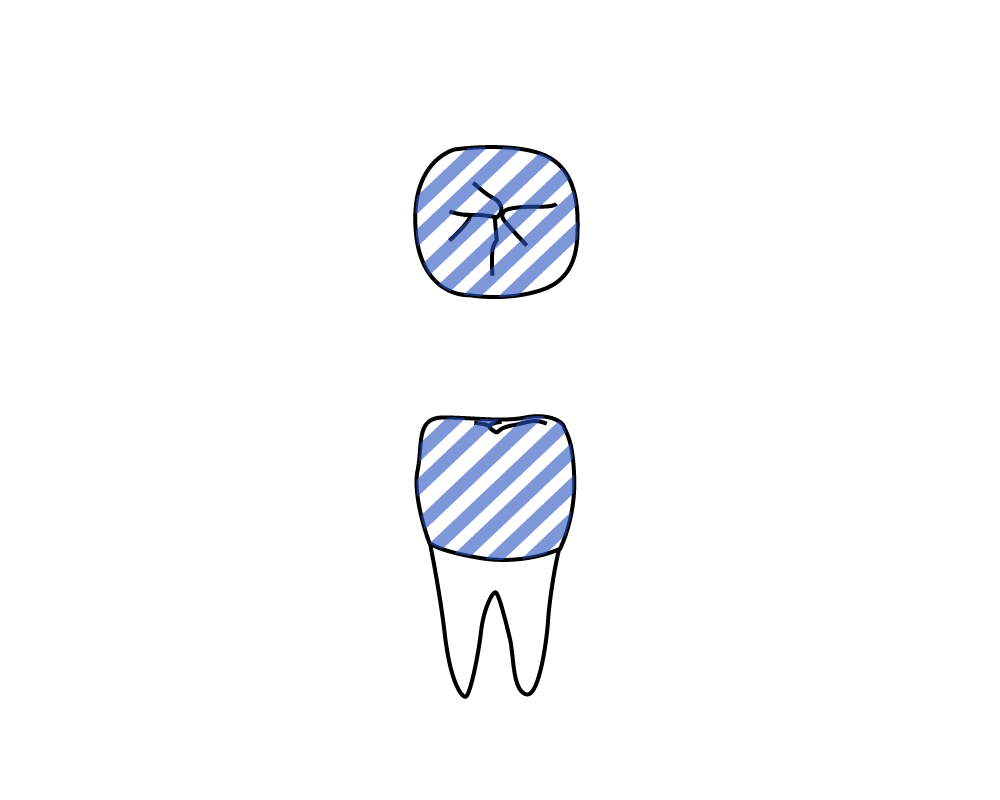
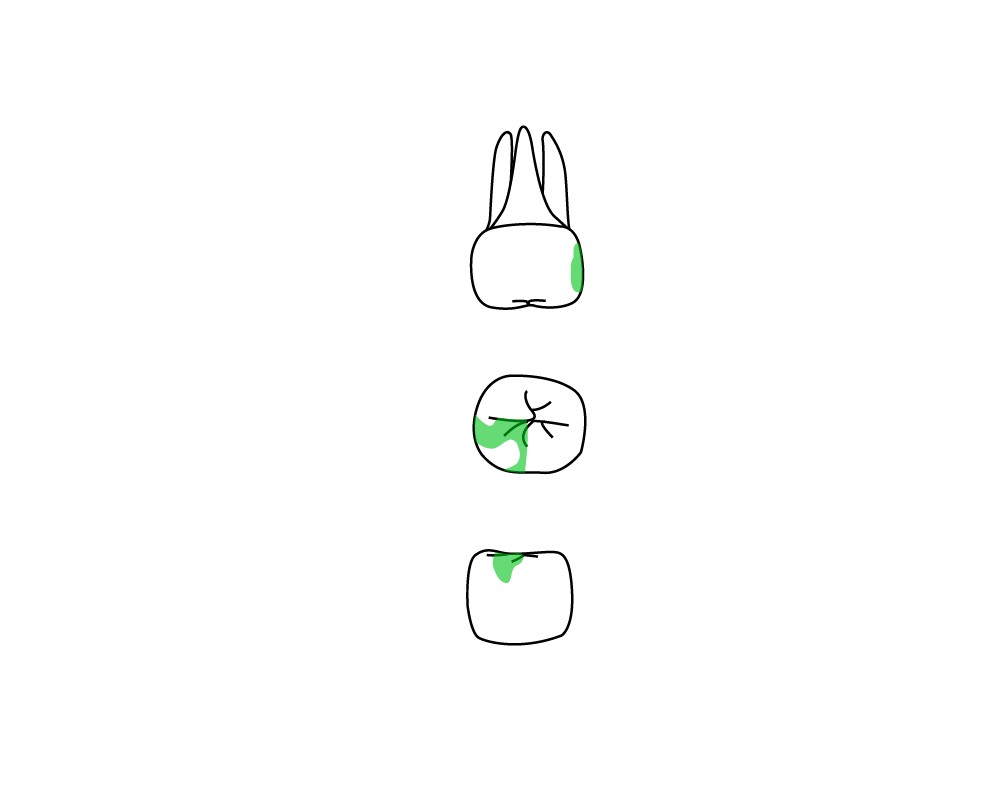
| Blue shading | Am | Amalgam filling present |
![]() © Conestoga College CC BY-NC-SA
| Tan/green shading | Cr | Composite resin filling present |
![]() © Conestoga College CC BY-NC-SA
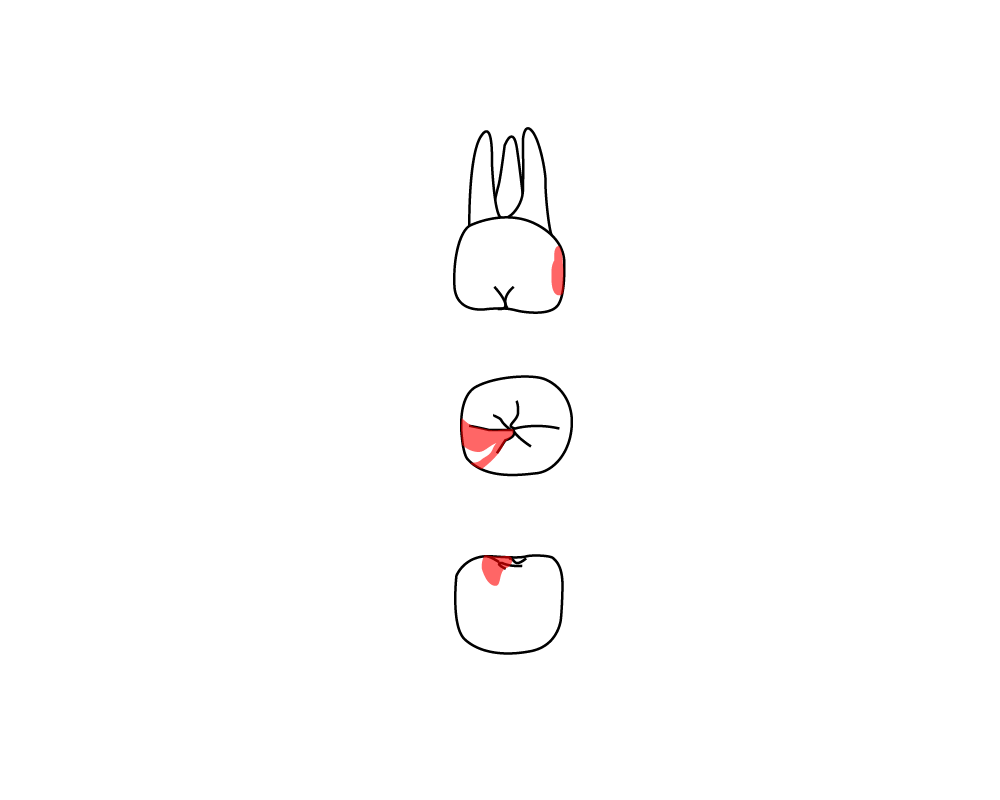
| Red shading | n/a | Caries – tooth needs future filling |
![]() © Conestoga College CC BY-NC-SA
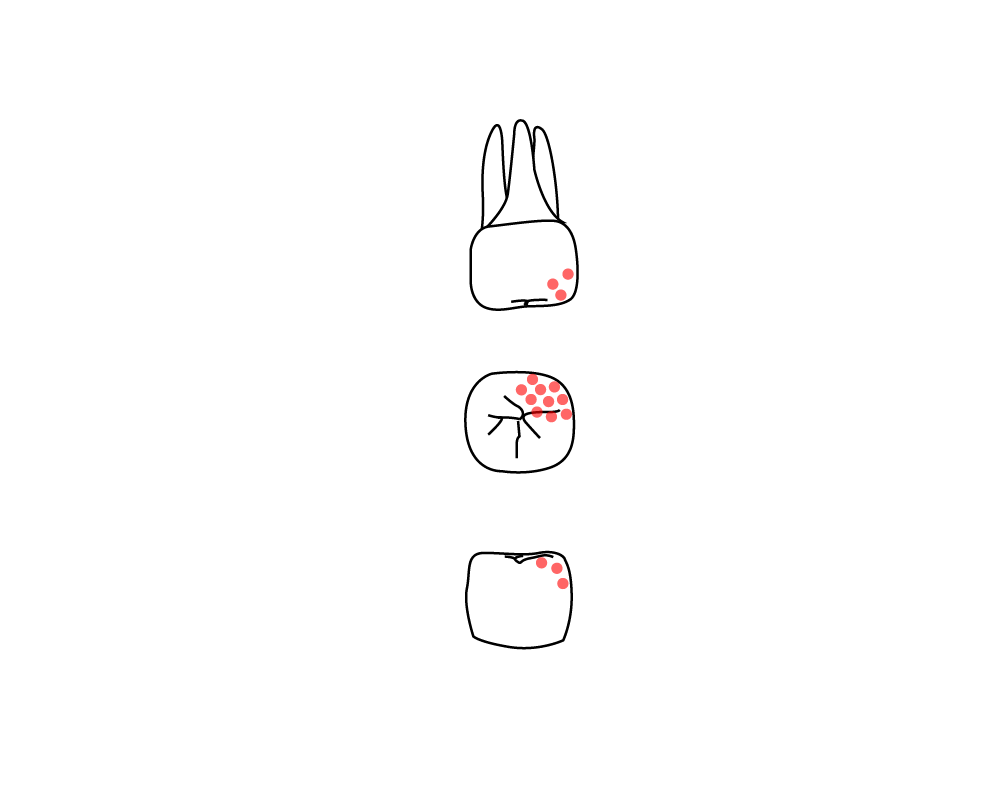
| Red dots | incip | Incipient caries (early decay) |
![]() © Conestoga College CC BY-NC-SA
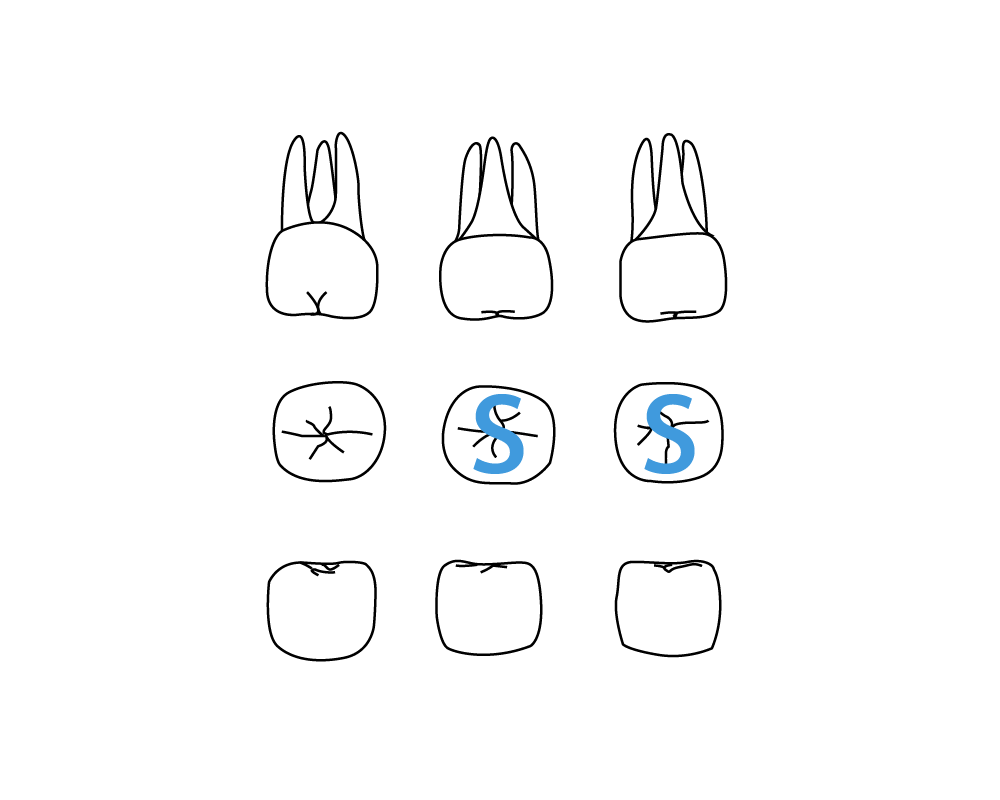
| n/a | S | Dental sealant was applied |
![]() © Conestoga College CC BY-NC-SA
| An X through the whole tooth | n/a | Tooth is missing/has been extracted |
![]() © Conestoga College CC BY-NC-SA
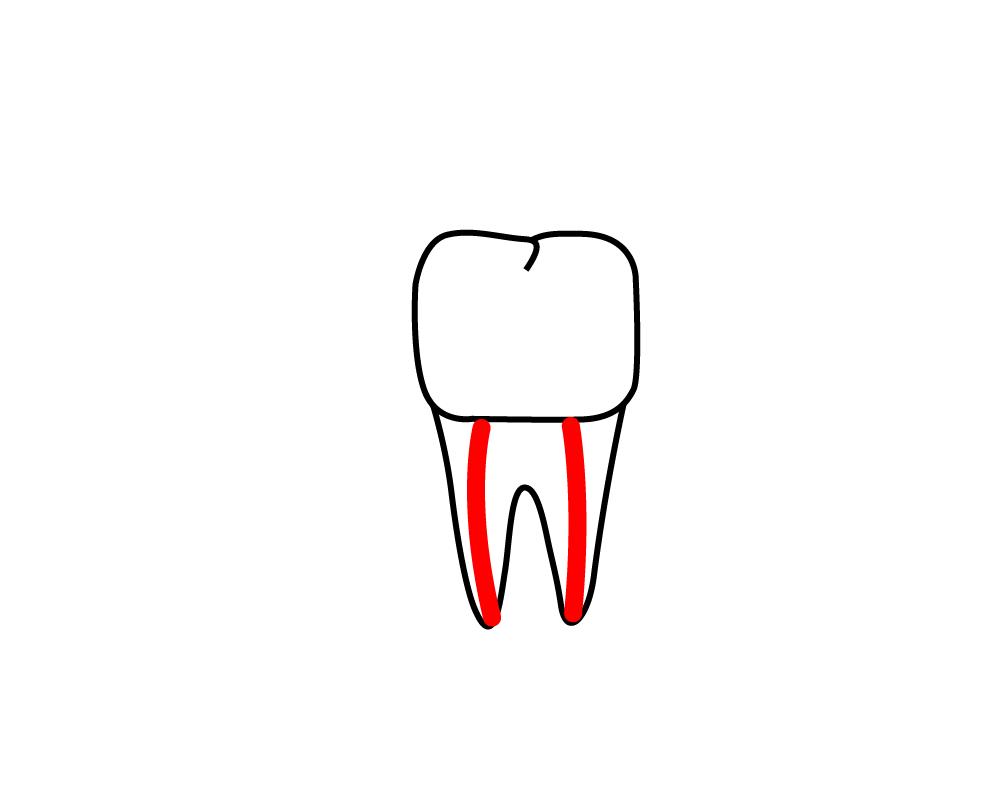
| 2 red lines through the root | RCT | Needs root canal therapy (If charted in black or blue then it has already been completed) |
![]() © Conestoga College CC BY-NC-SA
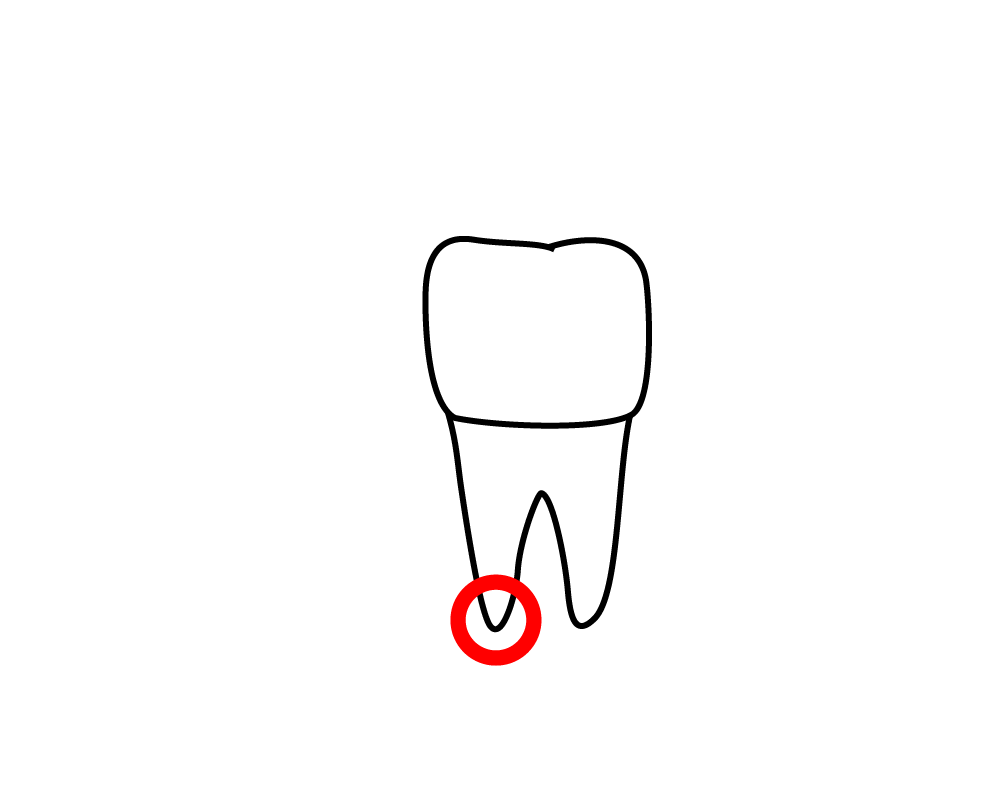
| Small red circle at the base of the root | n/a | Abscess |
![]() © Conestoga College CC BY-NC-SA
| Multiple teeth connected with a line | n/a | A bridge |
![]() © Conestoga College CC BY-NC-SA
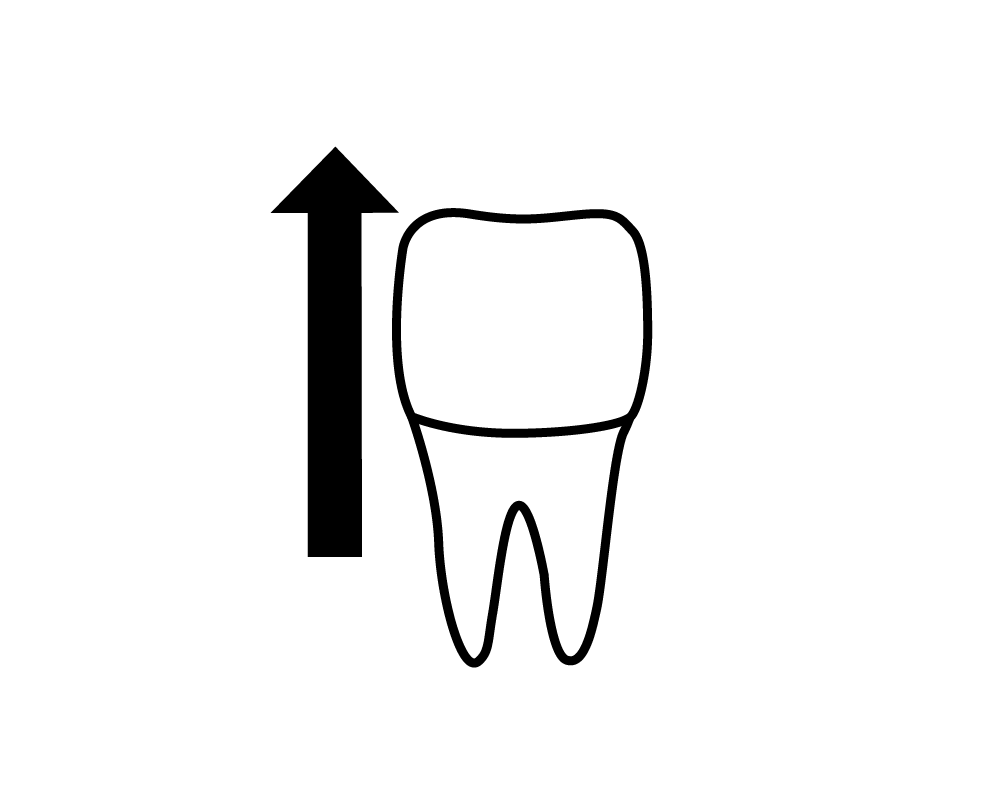
| An arrow pointing towards the crown of the tooth | n/a | An over-erupted tooth |
![]() © Conestoga College CC BY-NC-SA
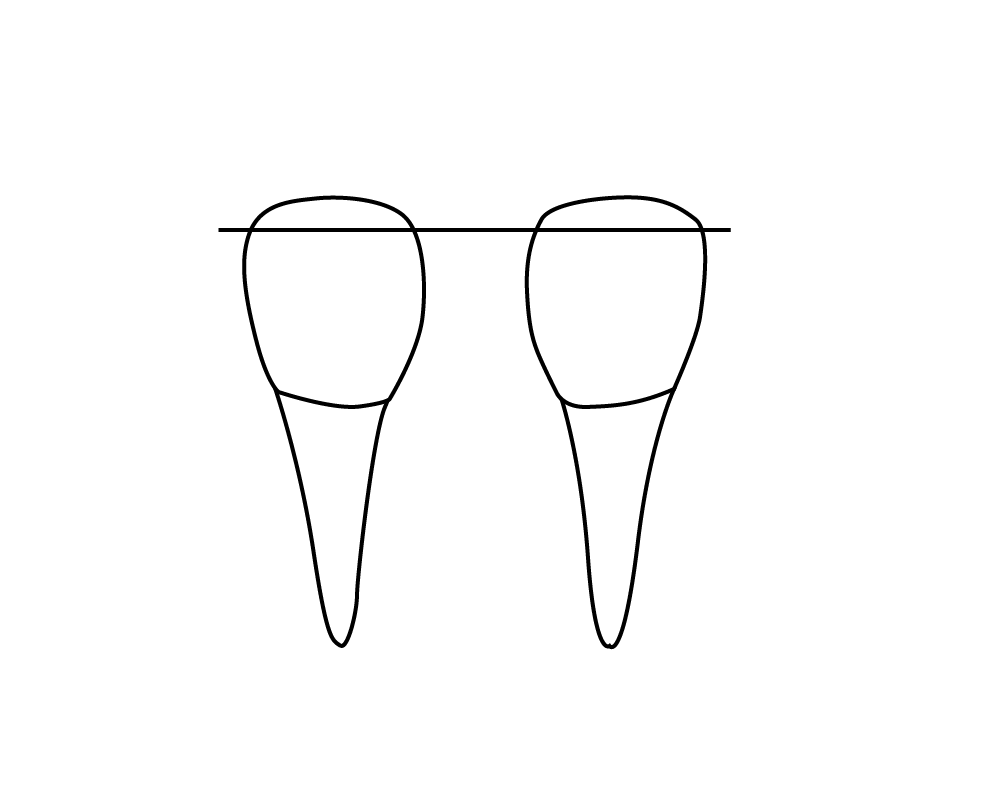
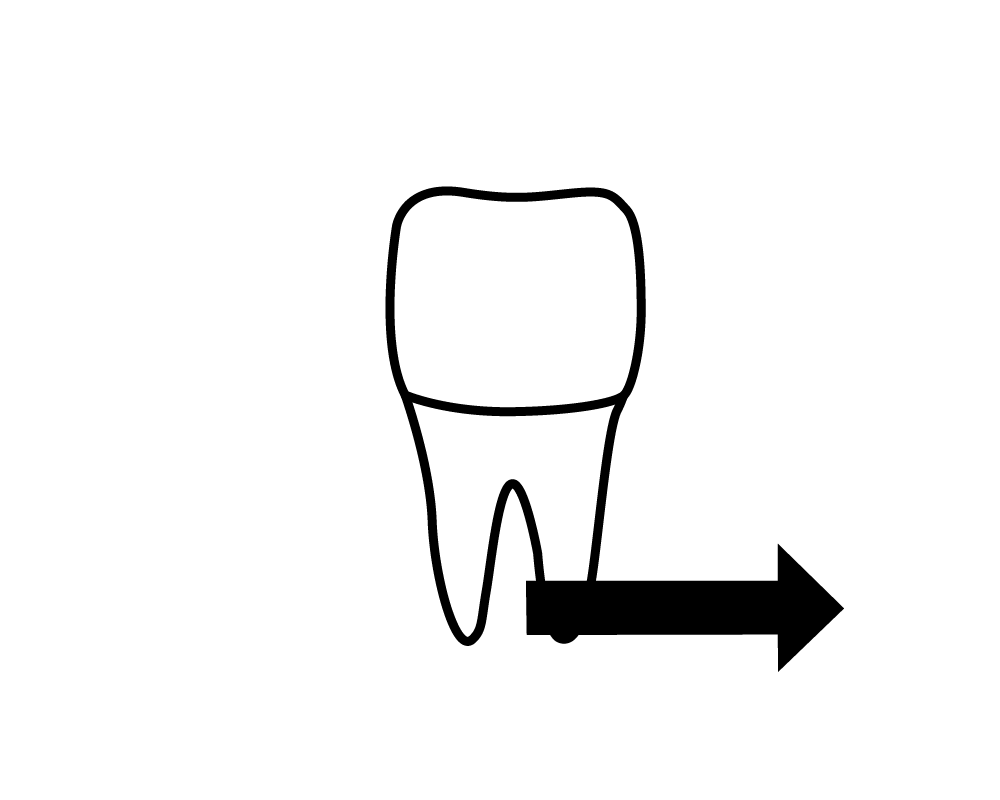
| An arrow pointing away from the midline of the tooth | n/a | Shows the direction of a tooth which is drifting |
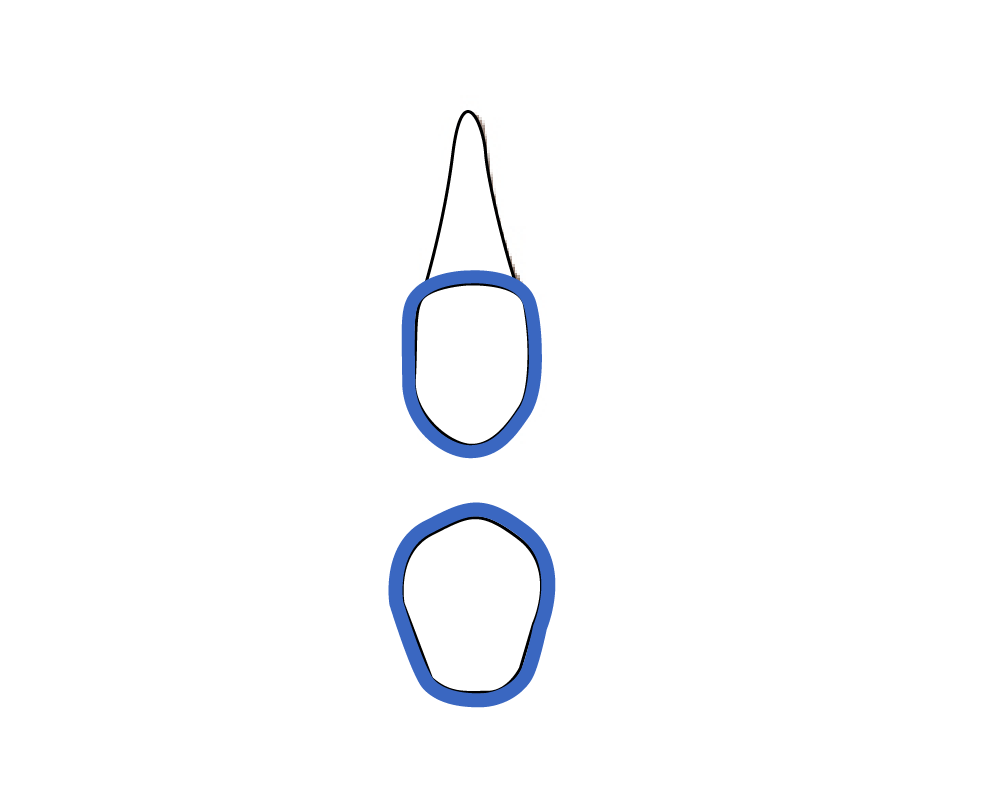
![]() © Conestoga College CC BY-NC-SA | Blue outline of the facial surface of the tooth | n/a | Veneer present |
Torres, H. O., Ehrlich, A., Bird, D. & Dietz, E. (2009). Modern dental assisting (9th ed.). W.B. Saunders Company.
Baillargeon, S. (2008). Dental office administration. Thomson Nelson.
Over the next 2 weeks we will explore the responsibilities of the dental business assistant and dental office manager. As we learned in week 1, these are two of the career opportunities for an HOA to consider within the dental industry, whose main responsibility is to ensure the office runs efficiently. We will begin by reviewing dental scheduling considerations.
Consider the following:
An interactive H5P element has been excluded from this version of the text. You can view it online here:
https://ecampusontario.pressbooks.pub/dentalwellness3/?p=53#h5p-8
How did you book your last dental appointment? Let’s review the 4 common methods an HOA might use to schedule a follow-up appointment for a client.
An interactive H5P element has been excluded from this version of the text. You can view it online here:
https://ecampusontario.pressbooks.pub/dentalwellness3/?p=53#h5p-9
As a dental business assistant or dental office manager, one of your responsibilities will be overseeing the financial aspects of the office.
Visits to the dentist can be costly. Since many Canadians do not have dental coverage, some clients can have a difficult time covering expenses. Payment plans can be organized in advance of procedures to ensure clients receive the treatment they need while offices are paid for the services they provide.
Unfortunately, accounts can become delinquent when fees are past due.
What can you do as an HOA to prevent accounts from becoming delinquent?
DBAs and office managers will also need to keep track of expenses and inventory.
Expenses:
Inventory:
Consider the following scenario:
Your client arrives for their dental appointment and is visibly anxious. They are fidgeting, sweating, and avoiding eye contact. You remember learning that 75% of adults experience fear of the dentist, which can lead to avoiding visits, ultimately requiring more painful and complicated procedures down the road. Perhaps your client had a previous traumatic experience (direct experience), or heard horror stories from a friend (indirect experience).
What are 3 actions you can take to positively impact your client’s dental experience?
Let’s review the commonly prescribed medications in dentistry
Analgesics:
Anesthetics:
Sedation:
Antibiotics:
Since they are so commonly prescribed, watch “Anitbiotics – What You Need to Know” by Rehealthify to learn more about antibiotics.
AccountingTools. (2022, November 21). Accounts receivable aging definition. https://www.accountingtools.com/articles/what-is-accounts-receivable-aging.html
Baillargeon, S. (2008). Dental office administration. Thomson Nelson.
Course Hero. (n.d.). Overview of receivables. Boundless accounting. Retrieved March 20, 2023, from https://www.coursehero.com/study-guides/boundless-accounting/overview-of-receivables/
Rehealthify. (2014, July 21). Antibiotics – what you need to know. [Video]. Youtube. https://www.youtube.com/watch?v=P665Slcmd8o
This week you will be learning about dental insurance, which is one category commonly offered in most private insurance plans. Additional details about private insurance will be reviewed during week 12, so stay tuned for more information about this important topic!
An interactive H5P element has been excluded from this version of the text. You can view it online here:
https://ecampusontario.pressbooks.pub/dentalwellness3/?p=55#h5p-10
As you learned in ADMN1030, the Ontario government offers supplementary programs to vulnerable populations in order to maintain and improve their health status. One program most often utilized in dental offices is Healthy Smiles, which provides free dental care to children 17 years old and under who belong to low-income families. Types of dental care include preventative, routine, and emergency services.
Visit the province’s Healthy Smiles program website to learn more about this special dental benefit, including qualifications for enrolment and locations of offices participating in this program. *Note: Since offices are not required to enrol, some will not offer this benefit.
Treatments and procedures are grouped into categories and assigned fee codes.
As an HOA, consider what the advantages and disadvantages would be for either approach.
The Ontario Dental Association (ODA) creates a fee guide to highlight procedure codes and suggested reasonable fees. Dental offices are not restricted by these fees and many will charge at their discretion.
However, insurance companies use this guide to set coverage limitations/provisions.
Let’s explore some common insurance provisions below:
Remember that, unlike OHIP, all private insurance policies are different! Coverage amounts and provisions may differ depending on the policy.
Quite often, your clients may have coverage under more than one private insurance plan. This commonly occurs with children when both parents have an insurance plan that covers the child. There are rules in place to guide you on the order in which multiple plans should be billed.
If a client has coverage under more than 1 private insurance plan as the plan member
If a client has coverage under more than 1 private insurance plan (1 as the plan member and 1 as a dependent on a spouse/parent plan)
An interactive H5P element has been excluded from this version of the text. You can view it online here:
https://ecampusontario.pressbooks.pub/dentalwellness3/?p=55#h5p-31
An interactive H5P element has been excluded from this version of the text. You can view it online here:
https://ecampusontario.pressbooks.pub/dentalwellness3/?p=55#h5p-32
If a client is covered under both their parents’ plans, apply the following rules:
If a client is a child with unmarried parents, apply the following rules:
An interactive H5P element has been excluded from this version of the text. You can view it online here:
https://ecampusontario.pressbooks.pub/dentalwellness3/?p=55#h5p-33
An interactive H5P element has been excluded from this version of the text. You can view it online here:
https://ecampusontario.pressbooks.pub/dentalwellness3/?p=55#h5p-34
An interactive H5P element has been excluded from this version of the text. You can view it online here:
https://ecampusontario.pressbooks.pub/dentalwellness3/?p=55#h5p-35
Depending on your office, you may be required to submit dental claims online through a secure network such as CDAnet. You may also be required to complete manual claim forms in the event your office does not direct bill, there is a power outage, or your client’s policy does not allow for direct billing. Regardless of the method, you will need to input the following information: client information, policy information, clinic/provider information, procedure code, tooth#, surfaces, and fees.
The standard dental claim form is available on the Canadian Dental Association website.
The ODA fee guide is available on the Ministry of Health website.
Your client Bob visited your office on June 1, 2022. He had a complete oral exam from the general dentist for permanent dentition. Your dental office charges the same fees set out in the ODA guide.
Complete the dental claim portion below using the ODA fee guide as a resource.
An interactive H5P element has been excluded from this version of the text. You can view it online here:
https://ecampusontario.pressbooks.pub/dentalwellness3/?p=55#h5p-11
Your client Elise visited your office on July 10, 2022. The general dentist performed an amalgam restoration on the occlusal and distal surfaces of her maxillary right first bicuspid. Your dental office charges the same fees set out in the ODA guide.
Complete the dental claim portion below using the ODA fee guide as a resource.
An interactive H5P element has been excluded from this version of the text. You can view it online here:
https://ecampusontario.pressbooks.pub/dentalwellness3/?p=55#h5p-12
Your client Karanjot visited your office on September 18, 2022. He had 2 units of time for scaling. Your office charges the same fees set out in the ODA guide.
Complete the dental claim portion below using the ODA fee guide as a resource.
An interactive H5P element has been excluded from this version of the text. You can view it online here:
https://ecampusontario.pressbooks.pub/dentalwellness3/?p=55#h5p-13
Baillargeon, S. (2008). Dental office administration. Thomson Nelson.
Canadian Dental Association. (n.d.). CDA standard dental claim forms. https://www.cda-adc.ca/en/services/cdanet/standard_dental_form.asp
Canadian Life & Health Insurance Association. (n.d.). A guide to the coordination of benefits [opens a PDF]. https://www.clhia.ca/web/CLHIA_LP4W_LND_Webstation.nsf/resources/Consumer+Brochures/$file/Brochure_Guide_To_CoOrdinationBenefits_ENG.pdf
Ministry of Health and Long-Term Care (2016). Healthy Smiles Ontario schedule of dental services and fees for dentist providers [opens a PDF]. https://www.health.gov.on.ca/en/pro/programs/dental/docs/HSO_Schedule_of_Dental_Services_and_Fees-Dentist_Providers_en.pdf
Welcome to Week 9! The first half of our course has been focused on the dental industry.
This week marks the start of the second half of the course, which focuses on wellness offices. Over the next several weeks, we will explore wellness concepts while also learning about industry-related software used to complete administrative tasks.
How do you define wellness? What images, words, or experiences come to mind? If you recall from ADMN1030, the definition of health and wellness has evolved over time. In addition, each person may have their own perspective and experiences that influence the concept of wellness. Write down your own definition of wellness and consider this definition from the Global Wellness Institute (2020).
Wellness is the active pursuit of activities, choices and lifestyles that lead to a state of holistic health.
With this description in mind, wellness offices employ healthcare providers who help support clients in achieving health in one or more dimensions of wellness.
The healthcare industry operates similarly to businesses. A good or service is provided and a transaction will take place (either in the form of OHIP, private, or out-of-pocket payment). Wellness offices will set organizational policies, procedures, and key principles when establishing their business.
(Current Nursing, n.d.)
An interactive H5P element has been excluded from this version of the text. You can view it online here:
https://ecampusontario.pressbooks.pub/dentalwellness3/?p=57#h5p-14
As a wellness office administrator, your responsibilities may vary depending on the size of the office, the number of healthcare providers you support, and the specific types of providers. It is essential to remember your scope of practice. You will never be required to provide direct client care. Stop and consider: have I be educated or trained to do these tasks?
Some common wellness office administrative responsibilities include:
There are several websites to explore when looking for a wellness office administrator position. Remember to customize your geographic location and utilize several different keywords when searching.
In addition, looking at the job boards/career pages of specific organizations or clinics is another great place to start.
Current Nursing. (n.d.). Mission, vision, value, objectives and philosophy of an organization. Nursing Management. Retrieved April 12, 2023, from https://www.currentnursing.com/nursing_management/mission_vision_values_of_organizations.html
Global Wellness Institute. (2020). What is wellness? https://globalwellnessinstitute.org/what-is-wellness/
Last week we kicked off our introduction to wellness offices. This week, we will review the scheduling requirements of a wellness office administrator and watch how an administrator uses Jane to create a new patient and book them into a schedule.
Fixed scheduling is the most common type of scheduling used within a wellness office. This method is characterized by having set office hours whereby clients are scheduled in a sequential order. For example: A provider may work between 9 a.m. and 5 p.m. with clients booked in every 30 minutes. Pre-booking or advanced booking is required.
An interactive H5P element has been excluded from this version of the text. You can view it online here:
https://ecampusontario.pressbooks.pub/dentalwellness3/?p=59#h5p-15
An interactive H5P element has been excluded from this version of the text. You can view it online here:
https://ecampusontario.pressbooks.pub/dentalwellness3/?p=59#h5p-16
An interactive H5P element has been excluded from this version of the text. You can view it online here:
https://ecampusontario.pressbooks.pub/dentalwellness3/?p=59#h5p-17
Keep in mind that while working in a wellness office you may be responsible for not only supporting more than 1 provider, but more than 1 type of provider. Each healthcare professional may require different scheduling considerations.
A wait list is a common component of any wellness office.
The cancellation policy is another common component of any wellness office.
An interactive H5P element has been excluded from this version of the text. You can view it online here:
https://ecampusontario.pressbooks.pub/dentalwellness3/?p=59#h5p-18
Last week, we discussed the scope of practice for a wellness office administrator. Some common tasks include cleaning, infection control, and inventory management. Let’s explore infection control in more detail.
Artera. (2022, November 4). 9 ways to improve patient scheduling – guidelines and efficiency. https://artera.io/blog/improve-patient-scheduling/
Centers for Disease Control and Prevention. (2021, October 18). Standard operating procedure (SOP) for triage of suspected COVID-19 patients in non-US healthcare settings: early identification and prevention of transmission during triage. https://www.cdc.gov/coronavirus/2019-ncov/hcp/non-us-settings/sop-triage-prevent-transmission.html
Davis, C.P. (2021, March 29). Medical definition of triage. MedicineNet. https://www.medicinenet.com/triage/definition.htm
Welcome to week 11! This week we will explore the responsibilities of a wellness office manager, which is a more senior role you may find yourself working in within the wellness office industry. This role comes with a lot of fun new tasks and responsibilities—let’s explore together.
Consider your Module 2 assignment in which you were assigned a dental office item and sourced the prices, quantities, and shipping details from a few different sites. As a wellness office manager you will be required to perform similar inventory processes but with unique items depending on the wellness provider.
An interactive H5P element has been excluded from this version of the text. You can view it online here:
https://ecampusontario.pressbooks.pub/dentalwellness3/?p=62#h5p-19
Consider traditional business marketing tactics… advertisements focus on the consumer, right? In wellness offices, it is important that your marketing strategies are directed to not only the consumer/client, but physicians, the general public, and community organizations too. Physicians may make a referral or recommendation to a client, the general public contains friends/family word-of-mouth referrals and community organizations often post educational content for everyone to see. By broadening your marketing approach, the mission of your clinic can become well-known (and well-utilized!).
An interactive H5P element has been excluded from this version of the text. You can view it online here:
https://ecampusontario.pressbooks.pub/dentalwellness3/?p=62#h5p-20
Social media has become a key marketing platform for the healthcare industry, including wellness offices. As an office manager, you may be tasked with creating various social media channels and posting scheduled content.
Office managers should be mindful of the following before posting:
Stop and consider:
Remember: Social media is a powerful tool but must be used and managed carefully!

As a wellness office manager, you may be responsible for staff and client communication.
When communicating with your staff, a wellness office manager should remember these 3 takeaways:
When communicating digitally with clients, a wellness office manager should remember these 2 takeaways:
Customer centricity is a term used to describe a healthcare business model that focuses on the client (A Roadmap to Improve Customer-Centricity in Health Care, 2016). By focusing on the client, organizations can better involve them in decision-making and approaches to treatment (A Roadmap to Improve Customer-Centricity in Health Care, 2016).
Consider your role as an administrator and office manager. How might you focus on the client?
A proactive approach is best—meaning that you won’t wait for an issue to arise before addressing it! Consider process improvements that could positively impact your staff and clients. When your staff are happy, this translates to the experiences involving the clients.
When your office receives a referral:
When your office sends a referral:
CareerExplorer. (2019). What does an office manager do? https://www.careerexplorer.com/careers/office-manager/
Walworth, M. (2018). Leveraging the 5 Ps in healthcare marketing. Franklin Street. https://www.franklinstreet.com/insights/2018/11/leveraging-the-5-ps-in-healthcare-marketing/
Ellis, L. (2016, August 29). A roadmap to improve customer-centricity in health care. Harvard T.H. Chan School of Public Health. https://www.hsph.harvard.edu/ecpe/a-roadmap-to-improve-customer-centricity-in-health-care/
Purcarea, V. L. (2019). The impact of marketing strategies in healthcare systems [opens a PDF]. Journal of Medicine and Life, 12(2), 93–96. https://doi.org/10.25122/jml-2019-1003
Insurance was briefly discussed when we examined dental insurance during week 7. This week, you will review some insurance terms and explore new concepts about private insurance, including employment opportunities in this industry!
What do you remember about insurance from the first half of our course?
An interactive H5P element has been excluded from this version of the text. You can view it online here:
https://ecampusontario.pressbooks.pub/dentalwellness3/?p=64#h5p-21
Not every Canadian has access to private health insurance, unlike those who have access to provincial health insurance, such as OHIP. Rather than being administered through the government, private insurance is run by many different for-profit businesses. Each plan (policy) will have different coverage amounts and provisions.
Canadians may receive private insurance through their employer, school, spouse, or parents, or may pay a monthly fee to self-insure.
Did you know that you have insurance as a full-time Conestoga student? Visit the Conestoga website to review your coverage details. [new tab]
The categories of private insurance coverage include the following:
All policies are different, and some will not include all categories listed above.
With the knowledge and skills you have gained from this program, you may consider career paths related to health within the insurance industry.
Some examples include underwriting, claim adjudication, customer service representatives, administration, and sales and marketing representatives. Browse the career pages of insurance companies and review the job descriptions. Many will note that medical terminology and healthcare education are considered assets. Let’s review two opportunities:
Underwriters assess risk. Consider the risks we take that negatively impact our health. An underwriter will review medical documentation including physical exam reports, attending physician statements, and client applications and compare them against mortality data. They will then determine how much a person should pay to have insurance coverage with their company.
If a client misrepresents themselves on an application, such as telling a lie or providing inaccurate medical information, the insurance company can deny a claim and/or remove them from coverage.
Underwriting can be applied in a group setting (assess the risk for a group of employees). Or can be assessed for an individual (1 person).
What Does a Claim Adjudicator Do?
A claim adjudicator reviews private insurance claim submissions and determines how much (if at all) a client or clinic should be paid.
They must first review the insurance policy and familiarize themselves with the coverage details and provisions. They would then verify that the client is covered under the policy and is eligible for this category and service. If missing or incorrect information is listed, they would decline the claim.
If the client is eligible for coverage, the adjudicator would review who should receive the money and issue payment. If the client has paid for the service and is submitting the claim, payment would be made to the member. If the clinic that performed the service submitted the claim on behalf of the client, the adjudicator would release payment to the clinic directly.
We covered the rules of coordination of benefits for adults and children in week 7. Below you will find a brief summary of the rules and some activities to check your knowledge.
An interactive H5P element has been excluded from this version of the text. You can view it online here:
https://ecampusontario.pressbooks.pub/dentalwellness3/?p=64#h5p-30
In class, we will be practicing manual submissions of private insurance claim forms and coordination of benefits examples.
During the final content week of the semester, we will examine the processes involved in working in an optometry office.
During class, you will research the descriptions, signs, and symptoms of 9 common optometry conditions. Complete the activity below by accurately naming the condition that is represented in the image.
An interactive H5P element has been excluded from this version of the text. You can view it online here:
https://ecampusontario.pressbooks.pub/dentalwellness3/?p=67#h5p-29
An interactive H5P element has been excluded from this version of the text. You can view it online here:
https://ecampusontario.pressbooks.pub/dentalwellness3/?p=67#h5p-22
Match the definition with the visual acuity term:
An interactive H5P element has been excluded from this version of the text. You can view it online here:
https://ecampusontario.pressbooks.pub/dentalwellness3/?p=67#h5p-23
Interested in a career as an optometric assistant? After completion of your HOA diploma, you are eligible to enrol in the online CCOA program. Learn more at the Canadian Association of Optometrists website [new tab].
| Tool Name | Description | Image |
|---|---|---|
| Autorefractor | A machine that gives a quick estimate of the patient’s prescription, giving a starting point.
| ![]() |
| Lensometer | A machine that measures the strength of a pair of glasses.
| ![]() |
| Fundus camera | Captures an image of the retina.
| ![]() |
| Colour vision test | Measures the ability to differentiate between colours.
| ![]() |
| Air puff tonometry | Uses a small puff of air to measure intraocular pressure
| ![]() |
Select the correct optic term for the provided description.
An interactive H5P element has been excluded from this version of the text. You can view it online here:
https://ecampusontario.pressbooks.pub/dentalwellness3/?p=67#h5p-24

| Notation | Description |
|---|---|
| O.D. | Right eye |
| O.S. | Left eye |
| P.D. | Pupillary distance – how far apart the two pupils are from each other. |
| SPH | Sphere of the eye – indicates the level of lens power required to correct nearsightedness or farsightedness. A minus sign (–) means you are nearsighted, and a plus sign (+) means you are farsighted. |
| CYL | Cylinder of the eye – indicates the level of power required to correct an astigmatism. A minus sign (–) means your astigmatism causes nearsightedness, and a plus sign (+) means your astigmatism causes farsightedness. |
| AXIS | The axis confirms which way and degree the astigmatism is oriented. |
| PRISM | A special type of lens used to correct eye alignment issues such as double vision. |
| BASE | Indicates the direction of the prism (either up, down, or out). |
| ADD | Added magnifying power – used for multifocal lenses such as bifocals or trifocals. |
An HOA working in an optometry office will need to understand OHIP billing, and private insurance, and process out-of-pocket transactions.
CCOA. (2023). Canadian Certified Optometric Assistant: About the program. Retrieved November 7, 2023, from https://opto.ca/ccoa
Depisteo. (2022). Tools used by an optometrist. Retrieved November 7, 2023, from https://depisteo.com/blog/tools-used-by-optometrist/
Heiting, G. (2022). All about vision: How to read your eyeglasses prescription. Retrieved November 7, 2023, from https://www.allaboutvision.com/eyeglasses/eyeglass-prescription.htm
Seltman, W. (2022). Eye doctors: Optometrists and ophthalmologists. Retrieved November 7, 2023, from https://www.webmd.com/eye-health/eye-doctors-optometrists-ophthalmologists
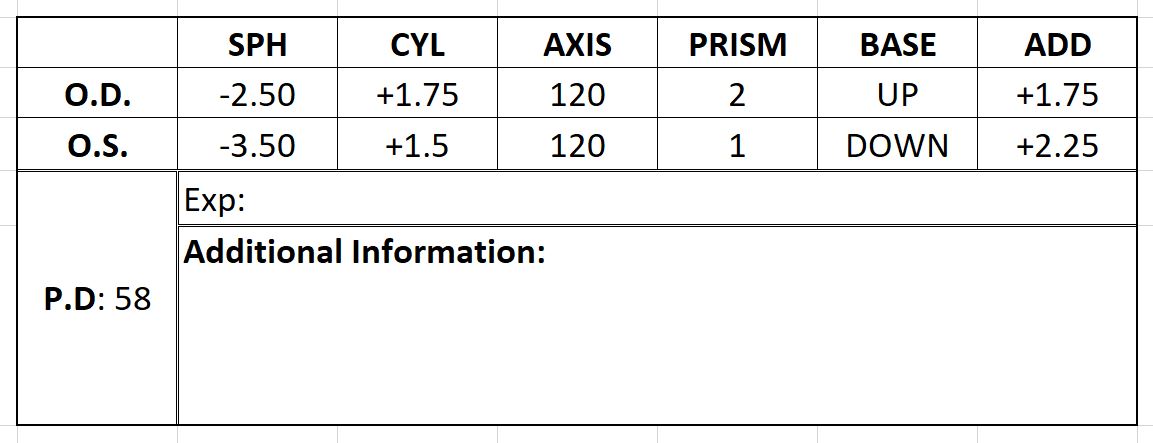
Prescription sample includes a table with the following information:
| [blank] | SPH | CYL | AXIS | PRISM | BASE | ADD |
| O.D. | -2.50 | +1.75 | 120 | 2 | UP | +1.75 |
|---|---|---|---|---|---|---|
| O.S. | -3.50 | +1.5 | 120 | 1 | DOWN | +2.25 |
Below the table are the following notations:
P.D: 58
Exp: [no notes]
Additional Information: [no notes]
[back]